
What It Is
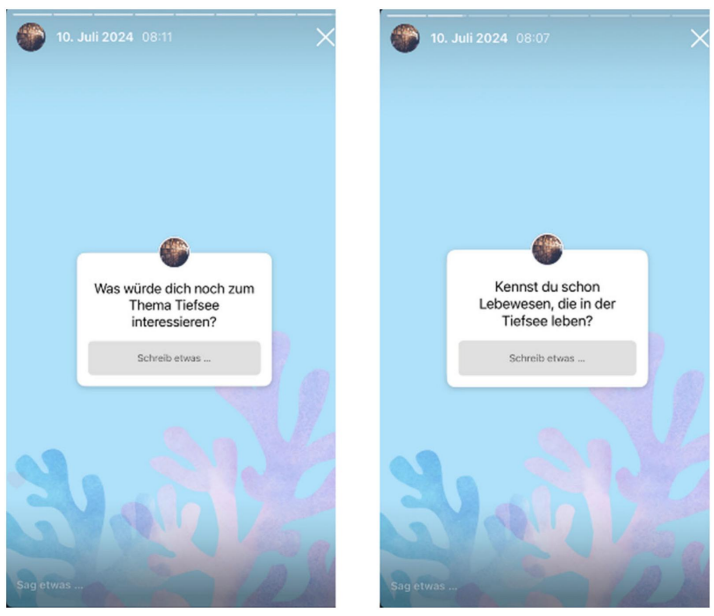
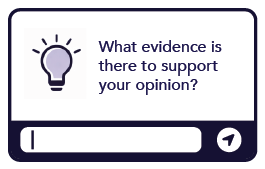
Posting thought-provoking topic-related questions with a space for users to answer.
Civic Signal Being Amplified
When To Use It
What Is Its Intended Impact
Increasing objective knowledge (i.e., fact-based learning on a topic) as opposed to subjective knowledge (i.e., how one feels about a topic)
Evidence That It Works
Evidence That It Works
Frauhammer and Dreston (2025) conducted an online field experiment in which participants were required to consume scientific information from an Instagram account on a daily basis and were randomly assigned to follow either (1) an account that only shared scientific stories or (2) an account that shared both (the same) scientific stories as well as thoughtful questions which participants had to respond to (what social scientists call “cognitive elaboration”). Results show that participants placed in the condition with elaboration questions had higher objective knowledge of the scientific topic, as measured by post-experiment questions (d=0.42). (Note: all effects we include are statistically significant, unless otherwise stated. We report effect sizes using the metrics in the authors' paper.)
In the study participants were required to answer the elaboration questions, therefore we don’t know what the effect would be on participants’ objective knowledge if they receive questions but do not answer them.
Why It Matters
When scientific information is posted and consumed on social media, the author’s as well as the reader’s likely goal is to increase objective knowledge and not merely subjective knowledge. Thought-provoking questions provide a possible way to increase objective knowledge and understanding of scientific information.
Special Considerations
The social media conditions in the study were compared with an additional condition in which participants read a newsletter that they received via email. Results show that consuming the same information via an email newsletter increases objective knowledge even more than the cognitive elaboration condition on social media.
Examples